
With our shallow supply chains already strained, how does a company balance the risk of COVID-19 against the risk of causing greater disruption? Answer - I don’t know.
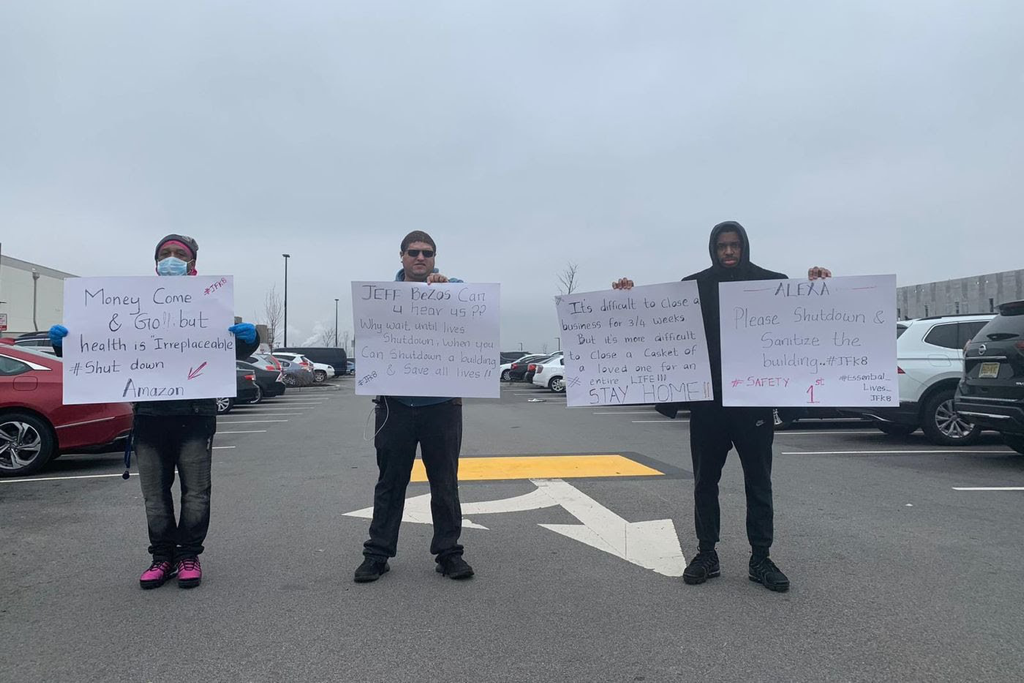
From The Verge: Amazon Warehouse Workers Walk Out in Rising Tide of COVID-19 Protests Photo credit: New York Communities for Change.
So here is the conundrum we find ourselves in. I am willing to listen to anybody that disagrees and I am not advocating any particular action, nor am I advocating that anybody be put in any undue danger or cause anyone else to be in danger. I am asking a question that needs to be asked.
How do we balance the need to slow/stop the virus against the need for our vital supply chains to remain operating?
The known values in the equation:
- Amazon, Walmart and all of the grocery chains are crucial. That is how people get their food.
-If the food supply is disrupted, lots of people go hungry.
-If people are hungry, social unrest becomes a very real possibility.
-No amount of cleaning can keep people safe. A casual hello to a co-worker appears to be enough to transfer the virus.
-On the flip side, shutting warehouses down would slow the spread of the virus and save people’s lives.
-Our supply chains are in the middle of a re-alignment, thus already vulnerable. We used to eat at restaurants and go to the bathroom at the restroom where we worked. Now we are doing all of that at home. This shift has caused delays already in getting our necessities (I can’t buy bread flour anywhere - didn’t know y’all were bakers).
-The realignment of our supply chain will happen - but it will take time.
-Also adding pressure to our supply chain is a reliance on a Just In Time inventory system that was promoted heavily by graduates of Ivy-league schools and gained popularity in the eighties and nineties. This eliminated much of the depth in our supplies and contributed to the difficulties we are experiencing now.
Variables in the equation:
-Time. How long before the infection rate peaks?
-Technology. How fast can we find a cure?
Unknowns - these are the riddles we are solving:
-Do we keep the warehouses and transportation systems open, even though they create an enhanced risk of transference of the virus? Or do we shut them down for 14 days? 21 days?
So, if you are the CEO of Amazon, what do you do? Remember, you will be judged forever by the decision you make.
How do we balance the need to slow/stop the virus against the need for our vital supply chains to remain operating?
The known values in the equation:
- Amazon, Walmart and all of the grocery chains are crucial. That is how people get their food.
-If the food supply is disrupted, lots of people go hungry.
-If people are hungry, social unrest becomes a very real possibility.
-No amount of cleaning can keep people safe. A casual hello to a co-worker appears to be enough to transfer the virus.
-On the flip side, shutting warehouses down would slow the spread of the virus and save people’s lives.
-Our supply chains are in the middle of a re-alignment, thus already vulnerable. We used to eat at restaurants and go to the bathroom at the restroom where we worked. Now we are doing all of that at home. This shift has caused delays already in getting our necessities (I can’t buy bread flour anywhere - didn’t know y’all were bakers).
-The realignment of our supply chain will happen - but it will take time.
-Also adding pressure to our supply chain is a reliance on a Just In Time inventory system that was promoted heavily by graduates of Ivy-league schools and gained popularity in the eighties and nineties. This eliminated much of the depth in our supplies and contributed to the difficulties we are experiencing now.
Variables in the equation:
-Time. How long before the infection rate peaks?
-Technology. How fast can we find a cure?
Unknowns - these are the riddles we are solving:
-Do we keep the warehouses and transportation systems open, even though they create an enhanced risk of transference of the virus? Or do we shut them down for 14 days? 21 days?
So, if you are the CEO of Amazon, what do you do? Remember, you will be judged forever by the decision you make.




 RSS Feed